“The ProFiled SelF”:
The Digital Identity Under Surveillance Capitalism
Abstract
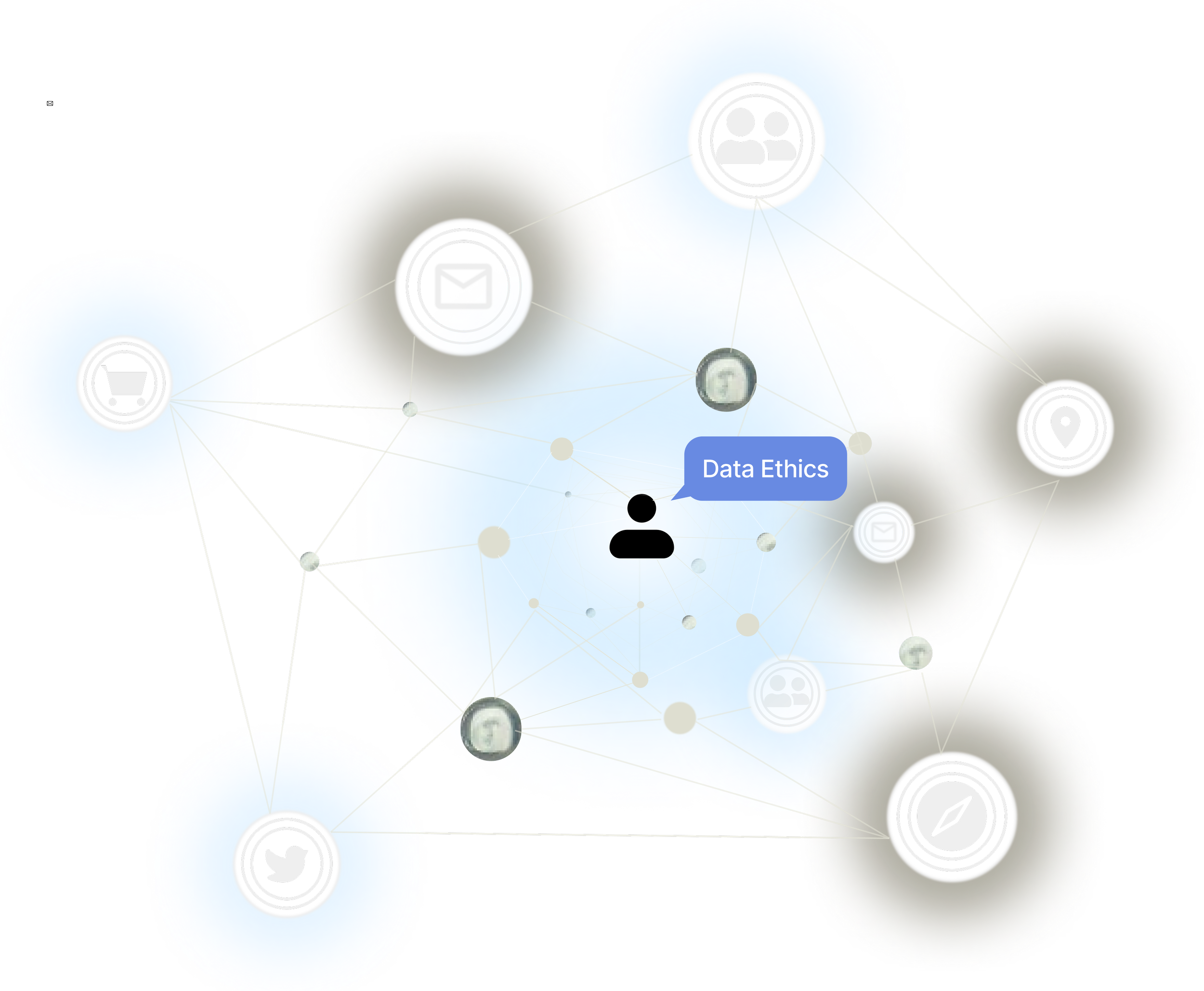
An Interactive Device Installation
In the era of big data, people have become a critical component in the entire information ecosystem. We are made of information, and we give it away, and have it taken away, on a daily basis. This constant exchange of information defines how we interact with the digital world, while also how the digital world perceives and responds to us. Thus, I want to create an interactive artwork focused on how individuals’ digital identities are shaped within the framework of surveillance capitalism. “Surveillance capitalism refers to the business practice of packaging and selling the information of consumers” (Biscontini, 2023).
Duration
09/2024 - 11/2024
Tools
p5.js, Figma, After Effects
Inspirations
“In the digital world, how would merchants see me as a consumer?”
“Are we being treated as products to be sold?”
“Does our digital profile really represent who we are?”
Research
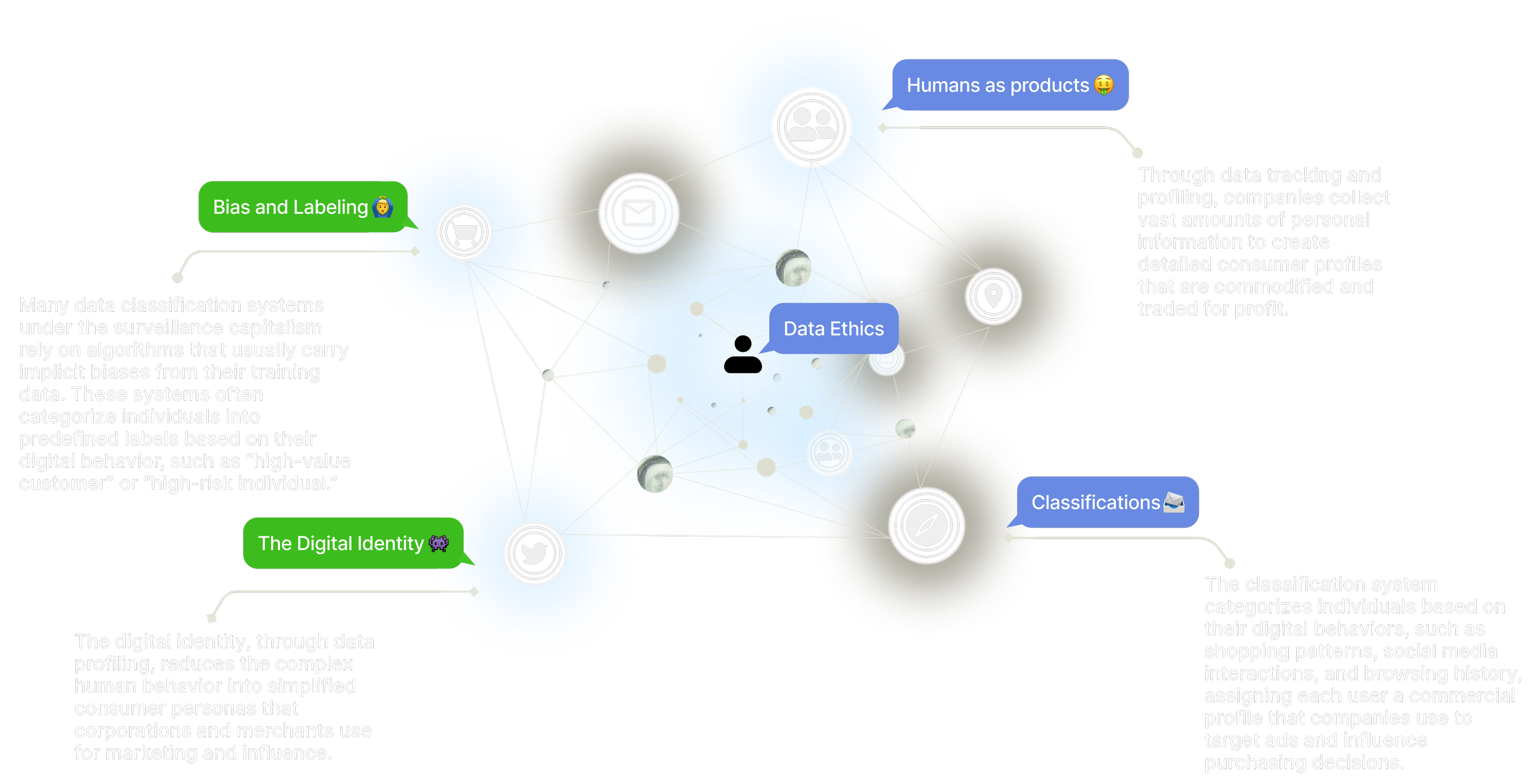
01. What are the unseen hidden layers?
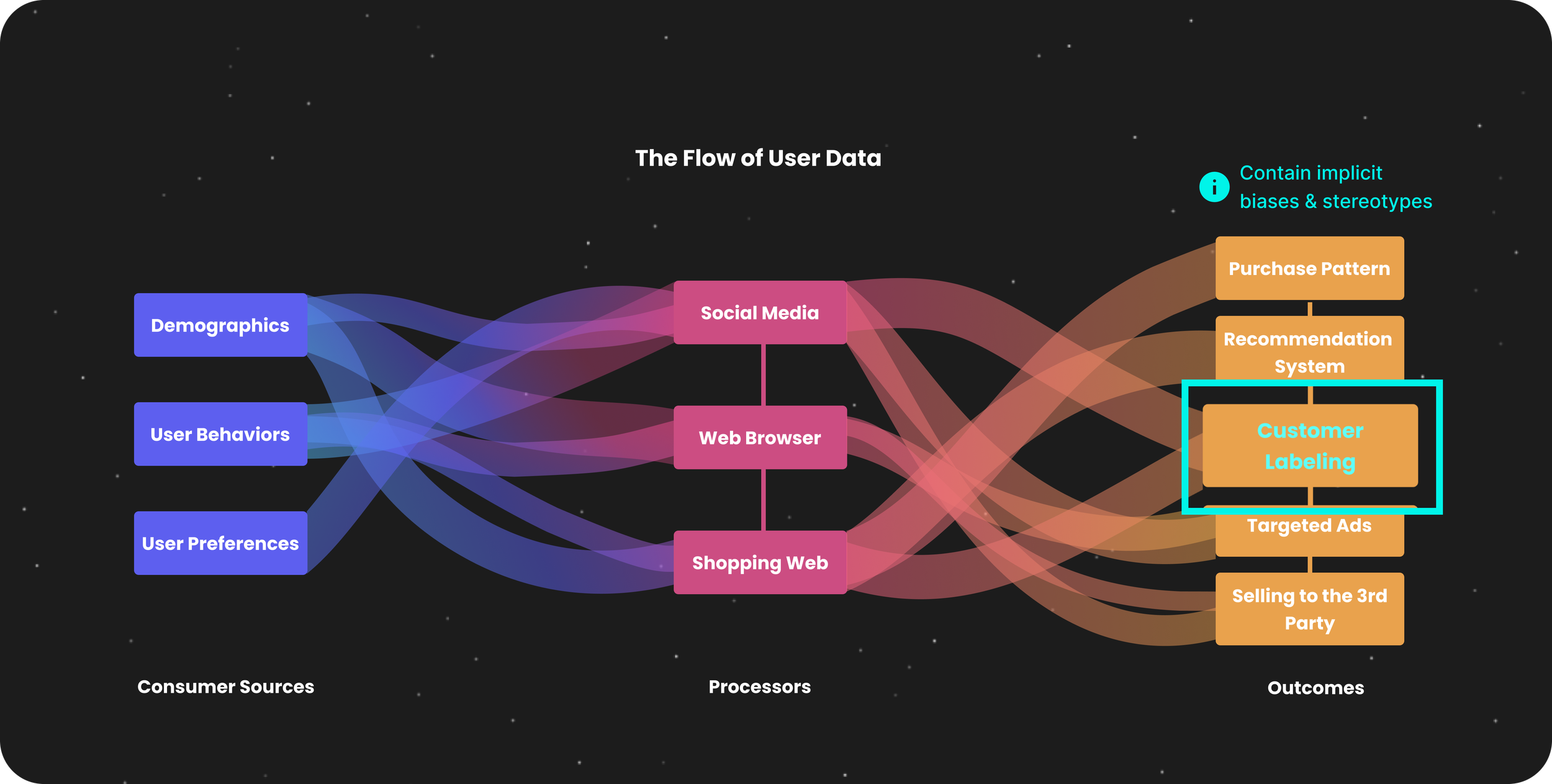
02. How does the merchant handle our information?
People’s information can be handled through the data warehouse. A data warehouse is a centralized storage designed for managing and analyzing large volumes of data from various sources.

03. How does the system shape our identity?
The users’ data points are utilized in behavior prediction and audience segmentation, which ultimately drive targeted advertisements and shape customer future behaviors. Customer labeling uses data to classify individuals into categories, often reinforcing implicit biases and unequal treatment.
Ideation
Problem Define
Design Goal
Brainstorm
Under surveillance capitalism, constant monitoring exploits individuals' control over their personal information; implicit biases within business systems perpetuate and reinforce their influence, shaping future behaviors and further hurting individuals’ privacy, and autonomy.
To create an interactive experience that reflectively reveals how personal data is collected, classified, and commodified under surveillance capitalism, finally raising the audience’s awareness and critical reflection on their digital identity and privacy.
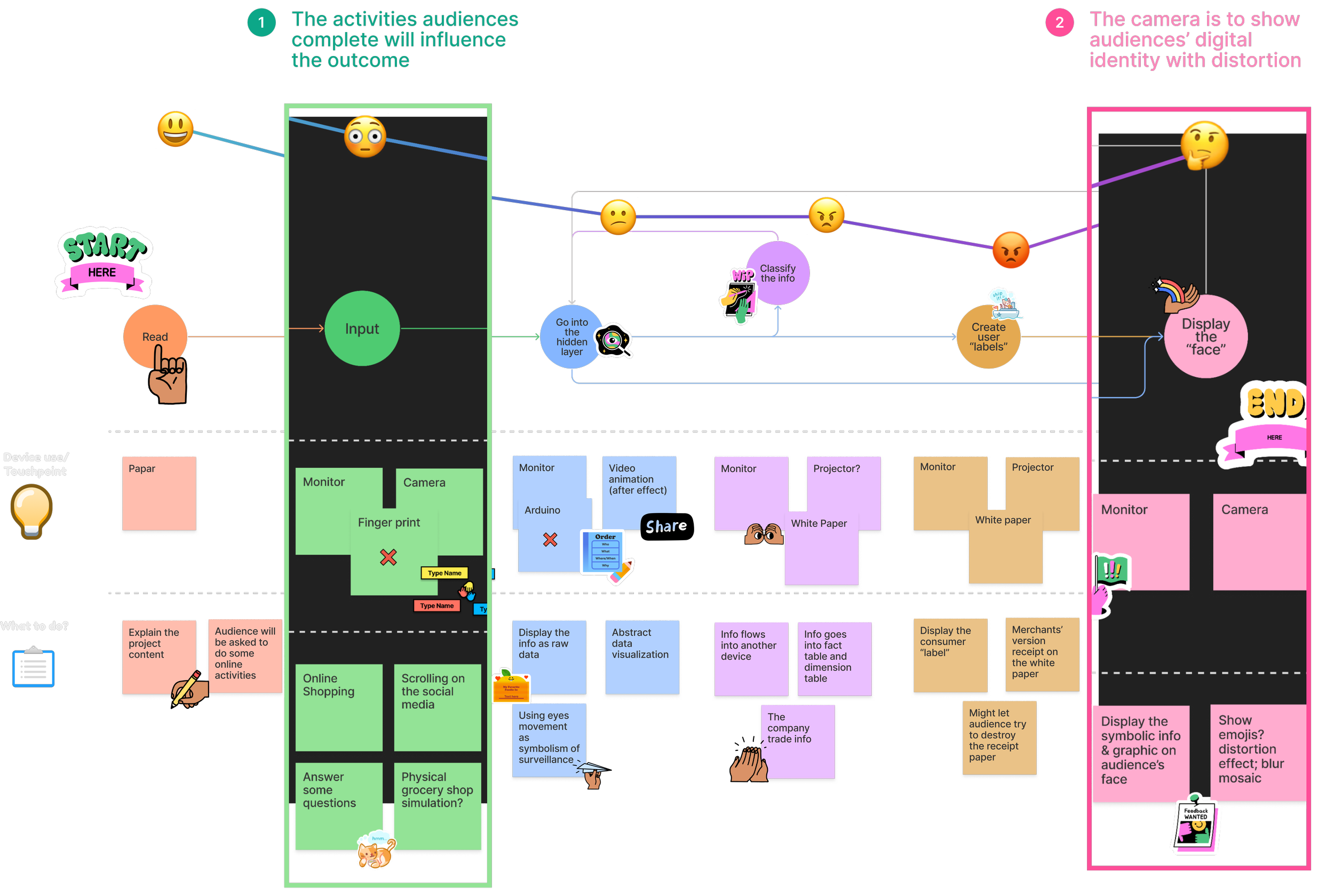
Brainstorm the entire interactive process, defining the desired audience emotions at each step and exploring potential methods and tools to encourage the audience to reflect on digital identity critically.

Design
Workflow
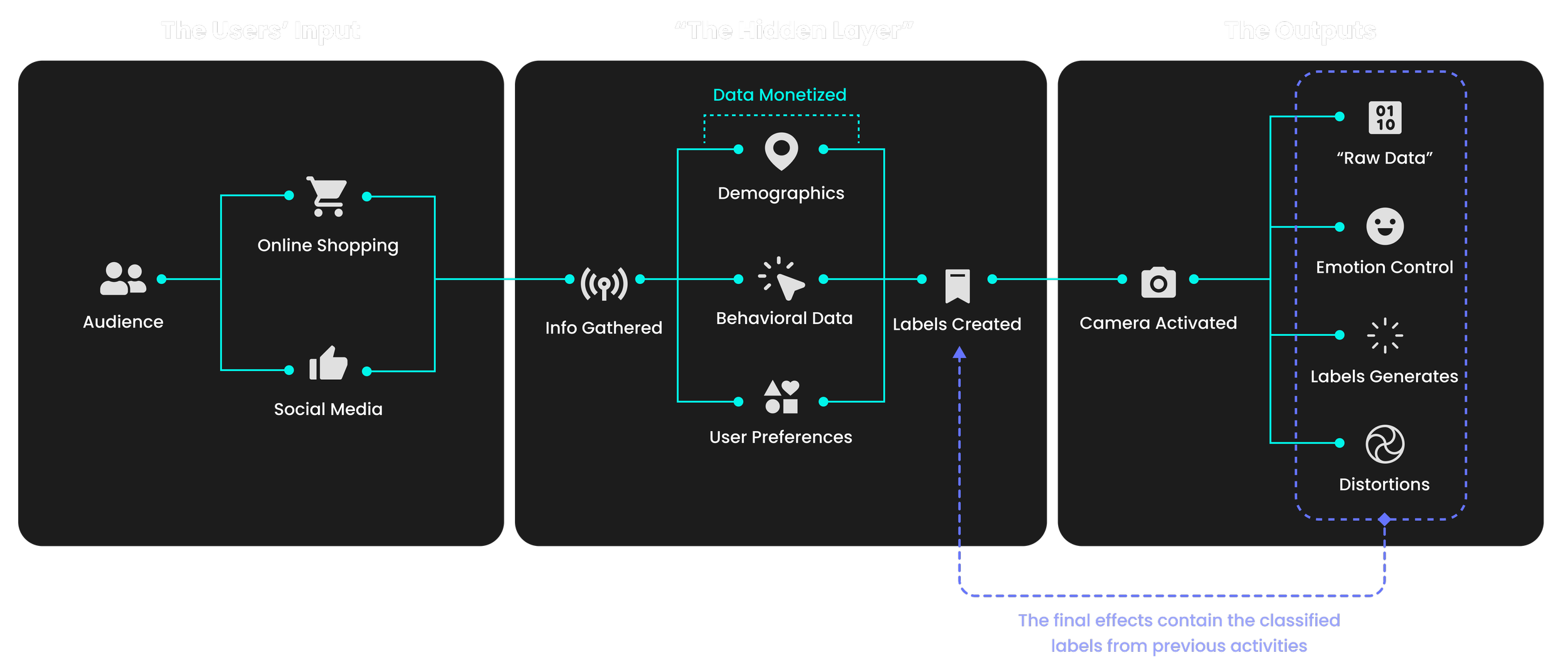
Building Process
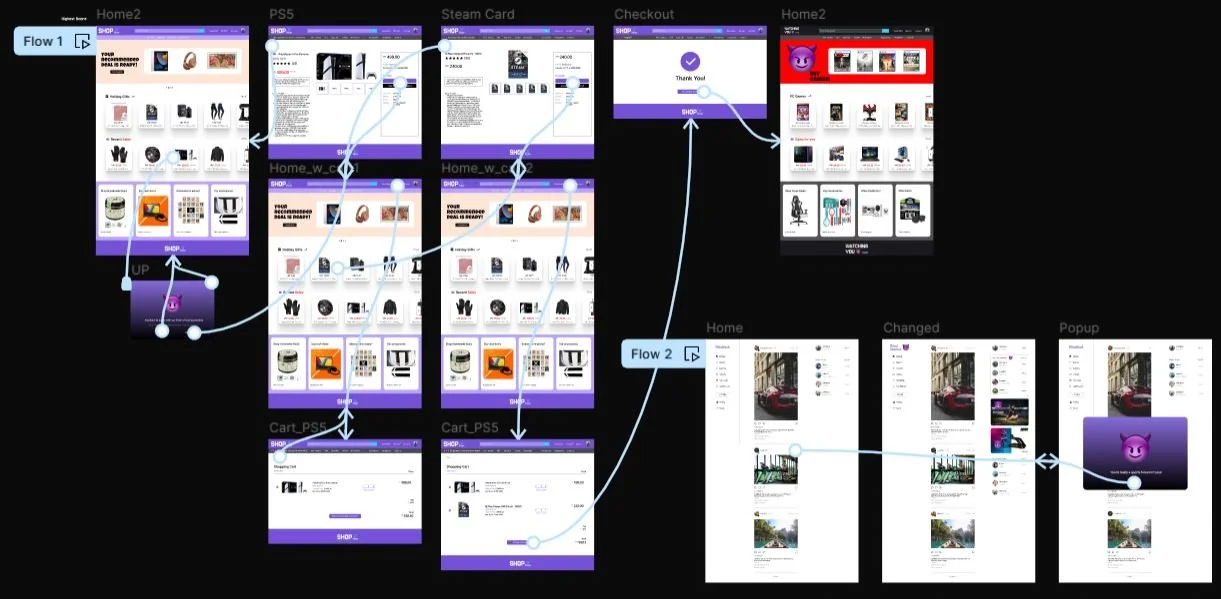
Part I - UI Design & Prototyping
Using Figma, I designed shopping and social media app interfaces that incorporate familiar daily online activities. Through prototyping and dramatizing these interactions, users can gain insights into the business monetization process and understand how their behavior is predicted and influenced over time.
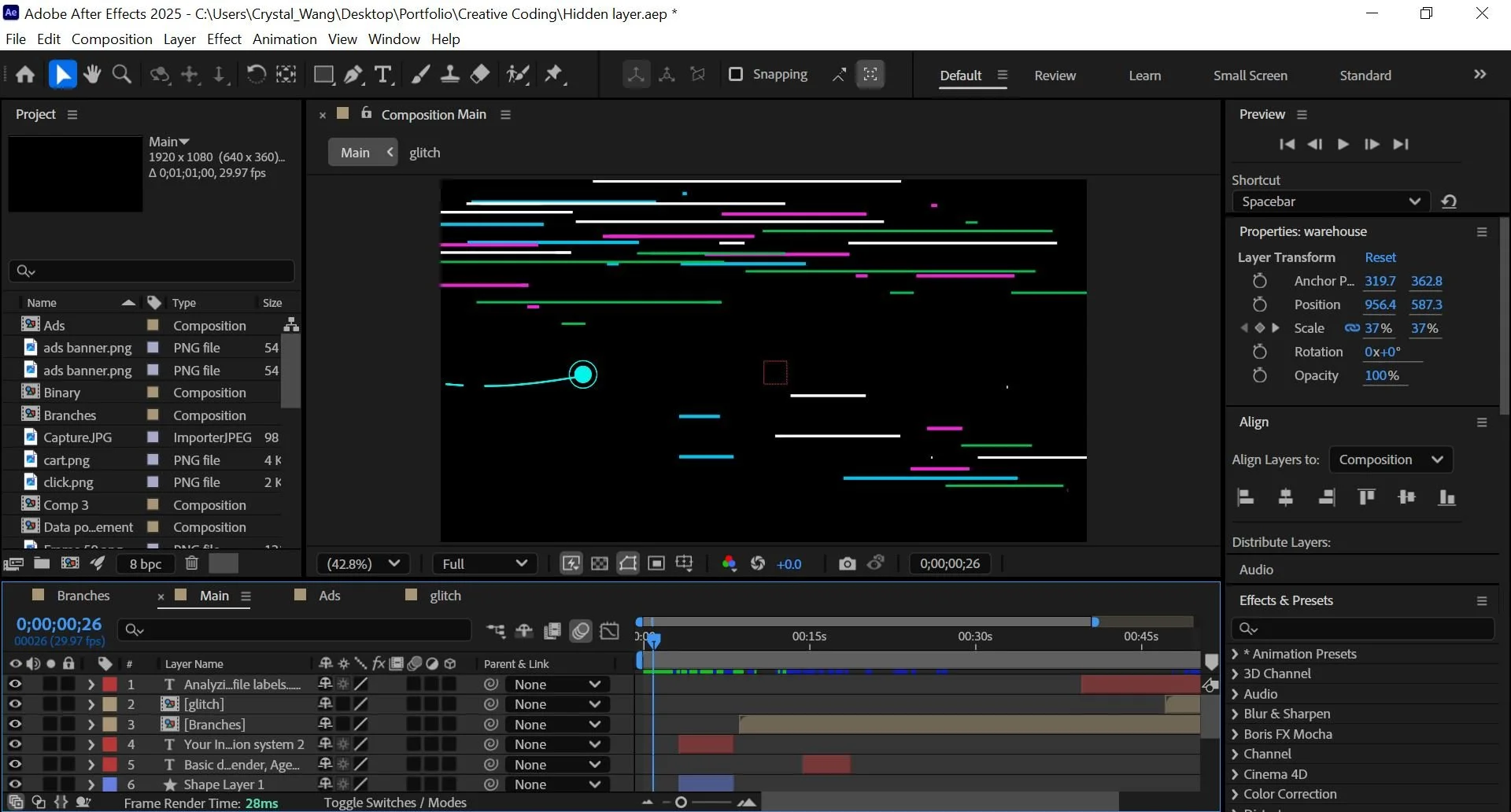
Part II - Motion Graphic
I used After Effects to create a motion graphic that visualizes the hidden processes behind online activities, showing how digital profiles are generated through business analysis and monitoring.
Part III - Creative Coding
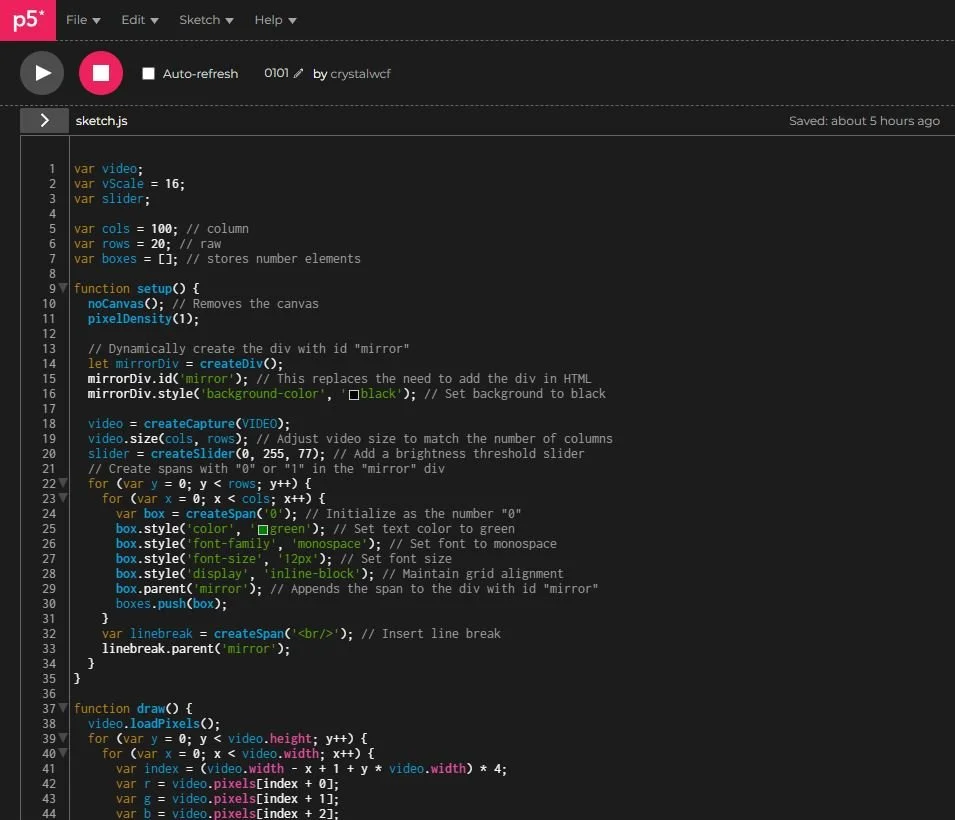
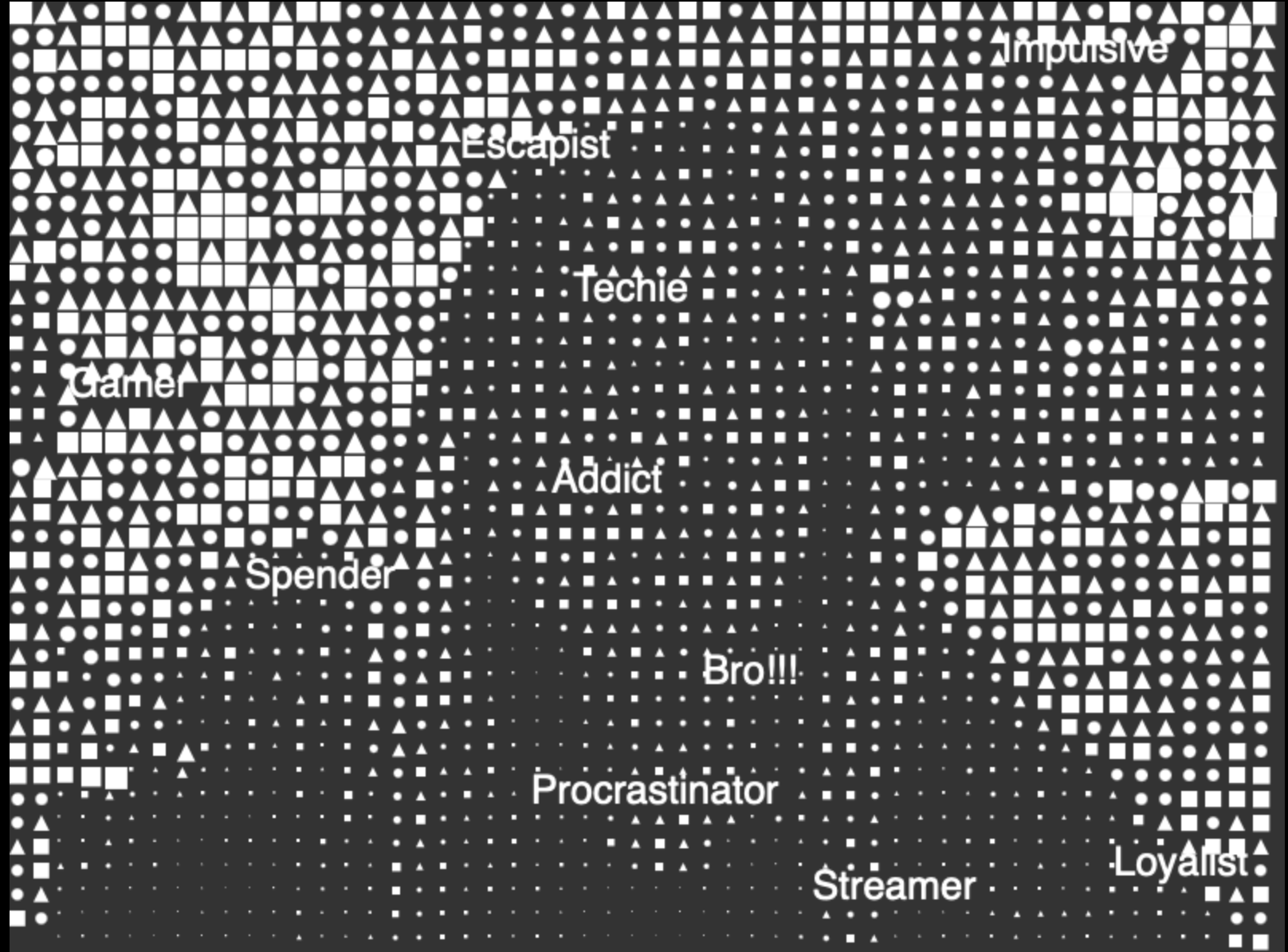
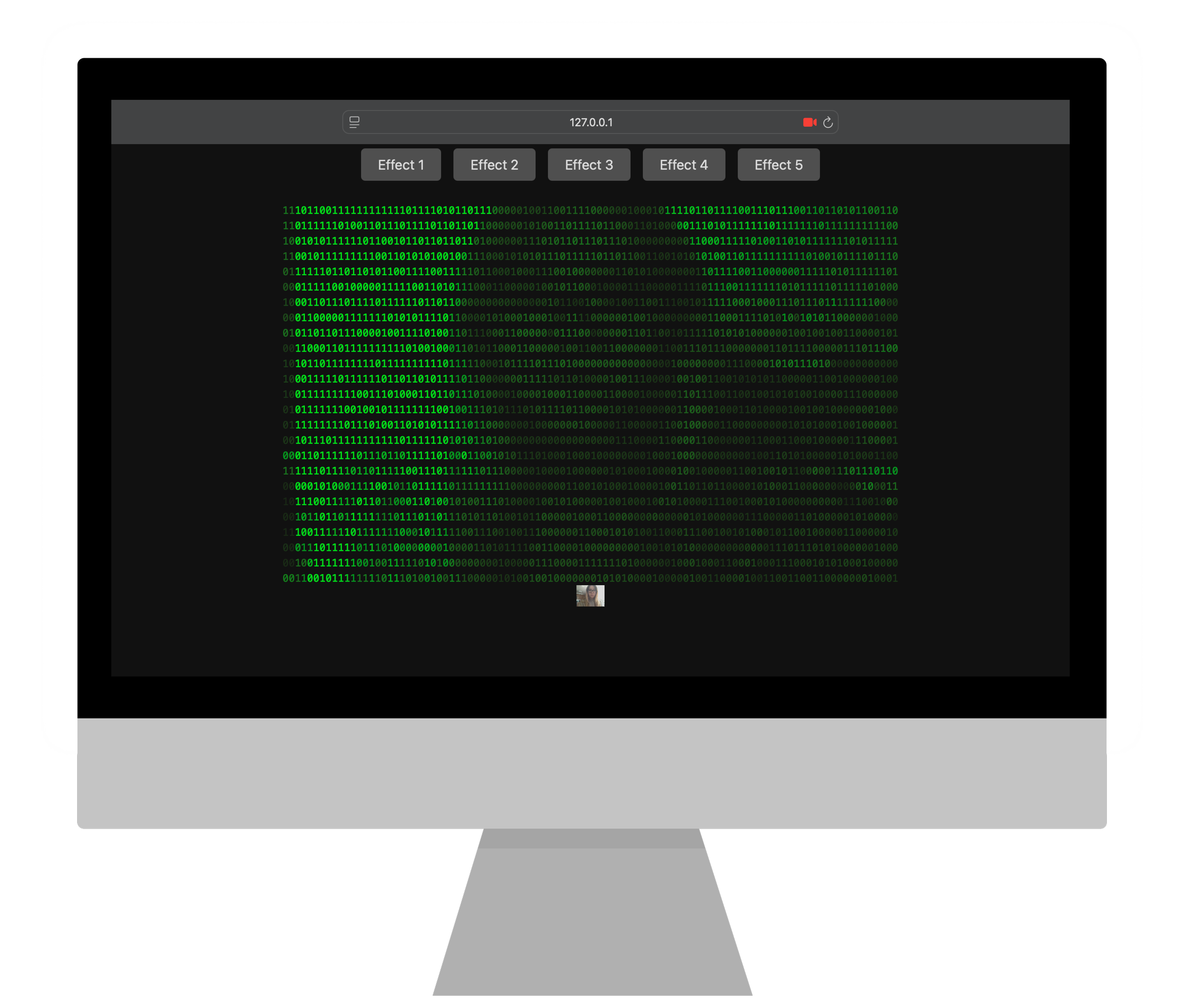
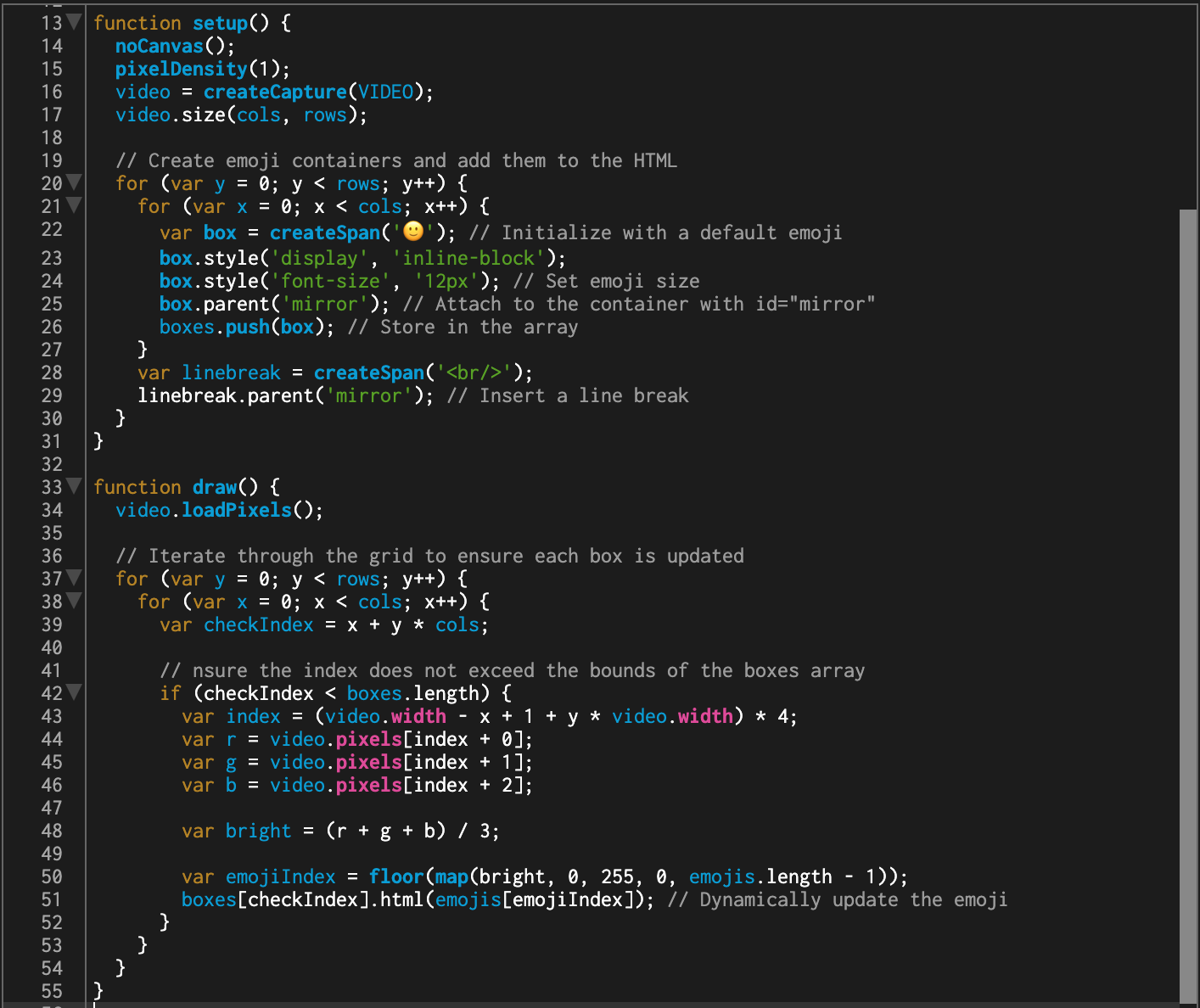
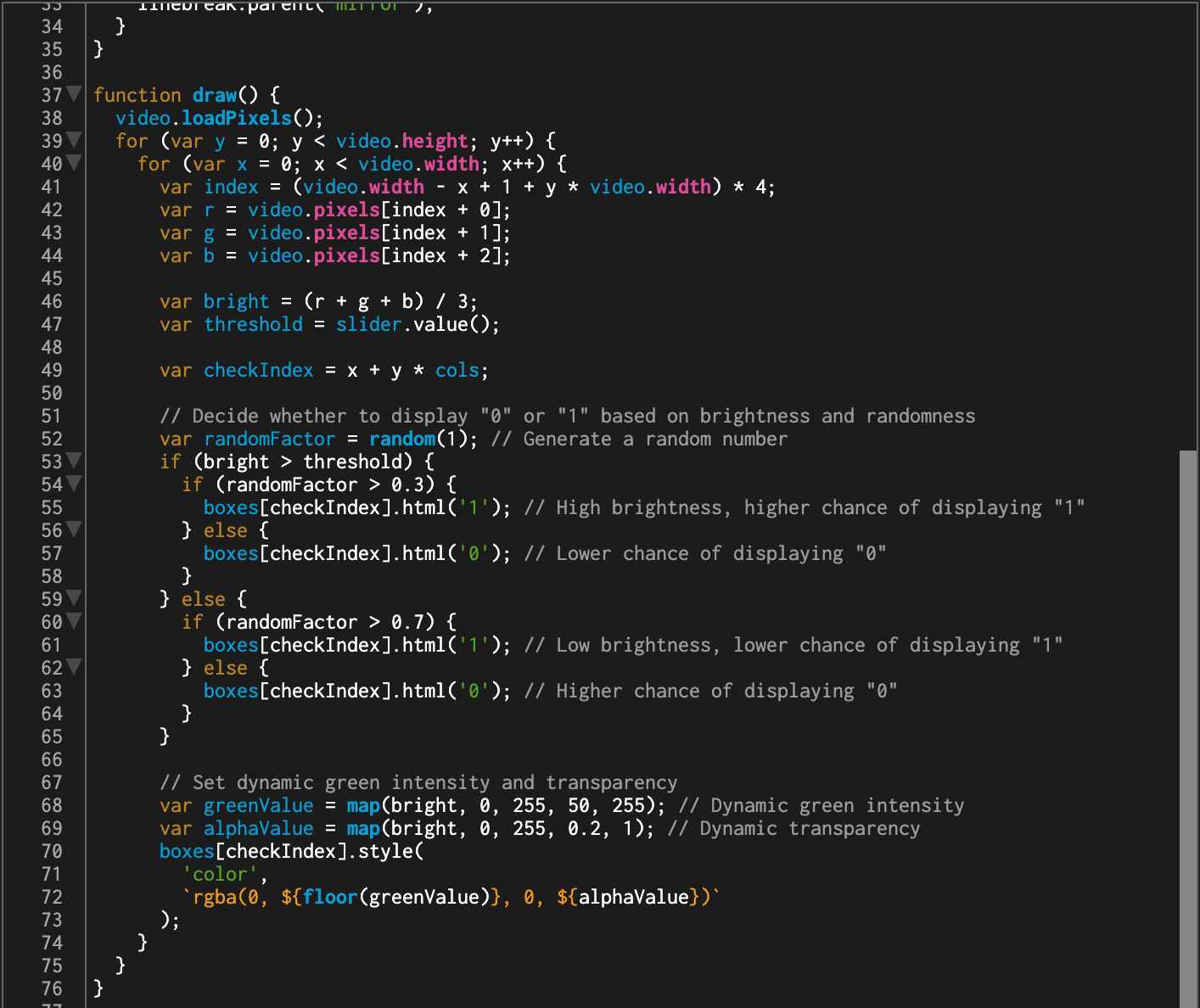
Using p5.js, I activated the participants' webcams within the browser environment to capture real-time video of their faces. The interface overlays bias labels dynamically generated from their previous online and shopping activities. These labels are positioned in the participants’ faces, creating a reflective visualization of how their digital actions shape their perceived identities.
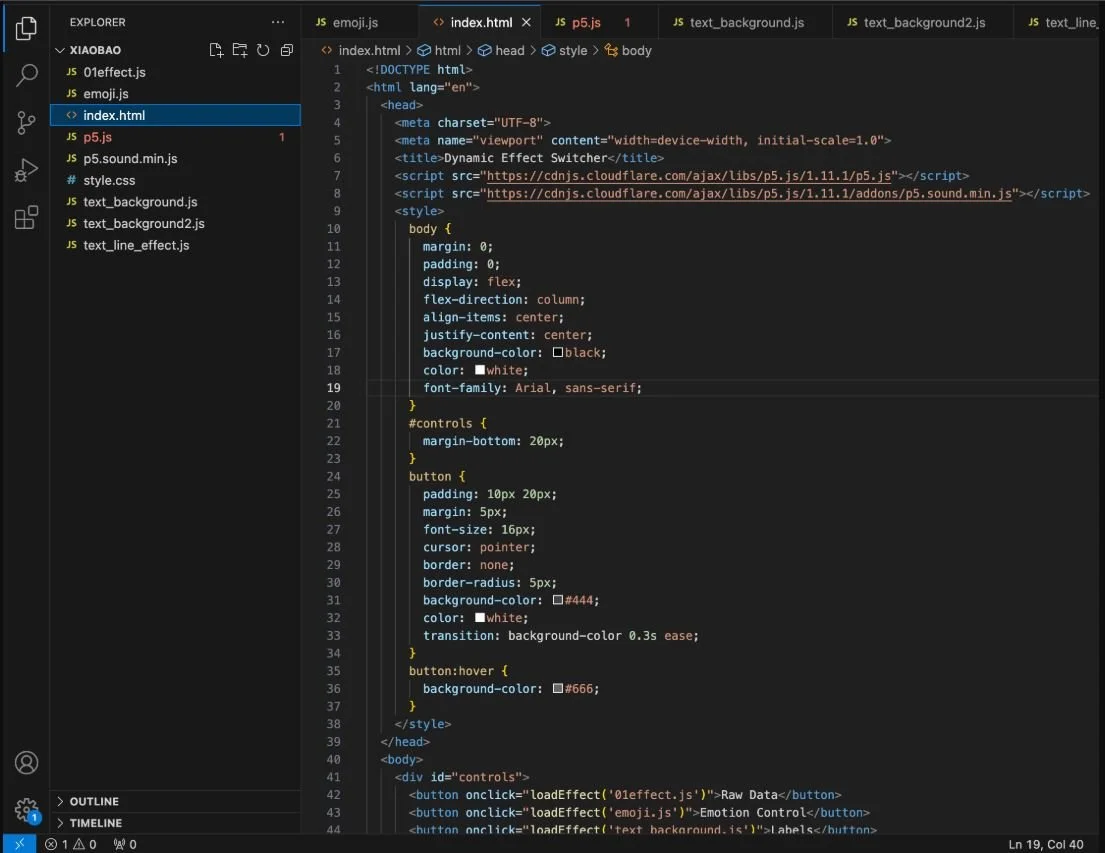
Once the p5.js sketch was finalized, I downloaded the code and set up a local development environment using Visual Studio Code (VS Code). A custom HTML file was created to host the p5.js sketch, enabling the integration of the JavaScript and HTML components required for the visualization from p5.
p5.js sketch


VS code environment


“The ProFiled SelF” Exhibition
Rensselaer Polytechnic Institute, SAGE Building, DIS Studio
Dec 11th, 11 am - 5 pm
In this project, I developed an interactive installation divided into three stations, utilizing creative coding to explore ethical gaps in digital identities within the context of surveillance capitalism.
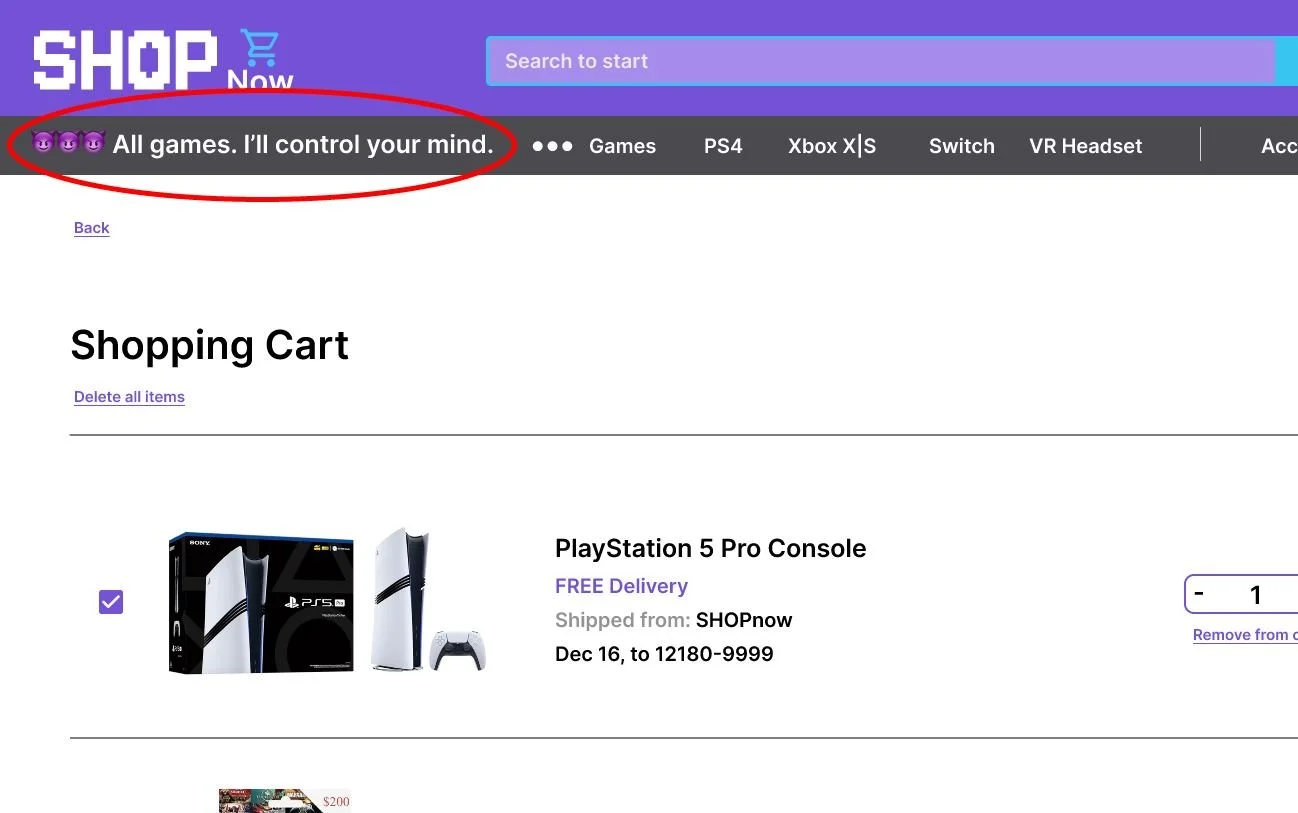
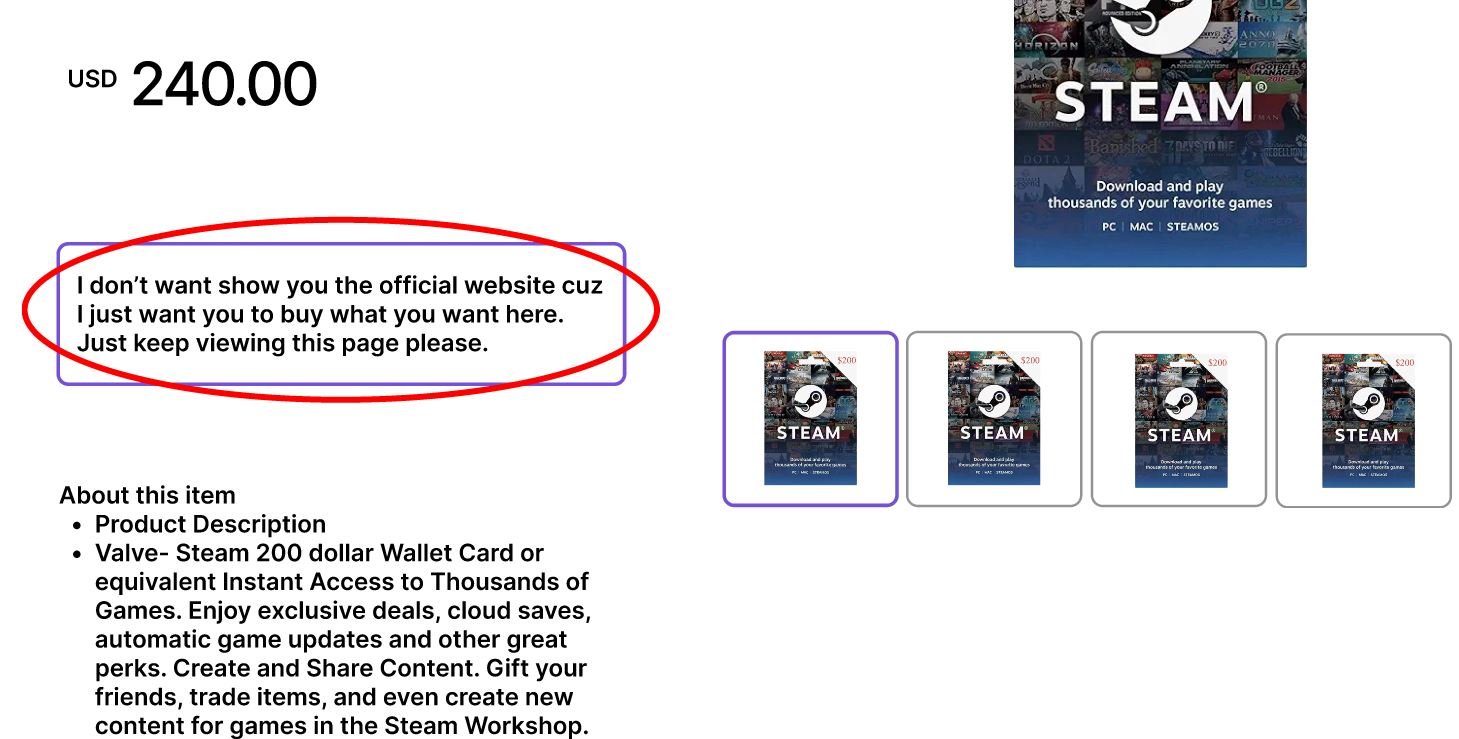
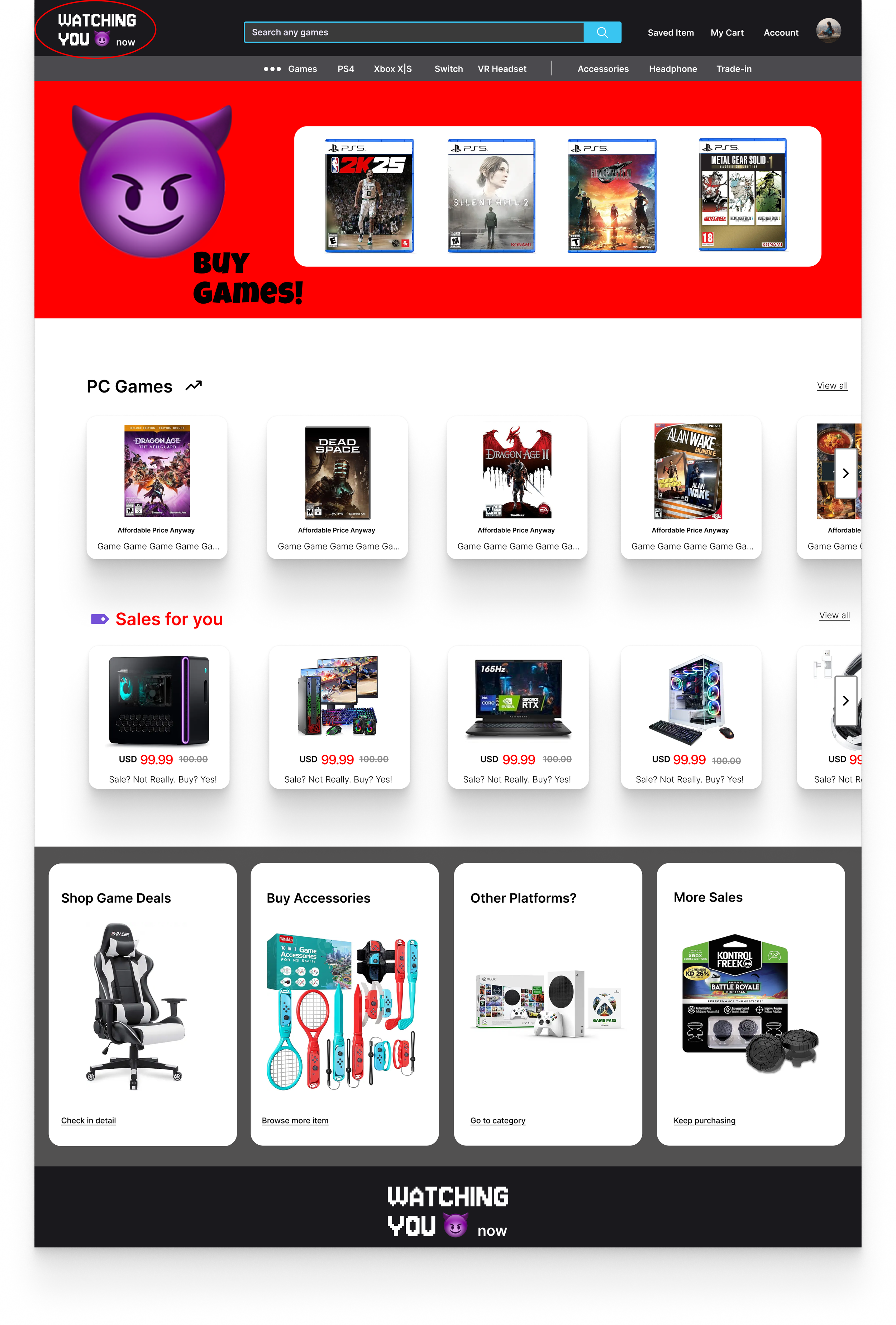
Station 1: Online activities’ simulation
Aim: dramatize the details, facts, and subtle coercion that shapes our daily interactions in the digital world, and showcase how these forces manipulate the individual’s behavior, blur boundaries, and hurt autonomy in ways often unnoticed but impactful.
Task #1: Complete the purchase of PS5 on the shopping website Task #2: Follow a fitness influencer on the social media
***Additional task
Try to find as many of the “easter eggs” on the page that you do not normally see on the conventional web or app.
Some “Easter Eggs”
Bring It to the Real World!

You are being watched now! The recommendation page drastically changed based on your previous behaviors.
Station 2: The story of your data
Aim: show how the information flows within classification systems, and organizes data into different categories for future analysis and business labeling.
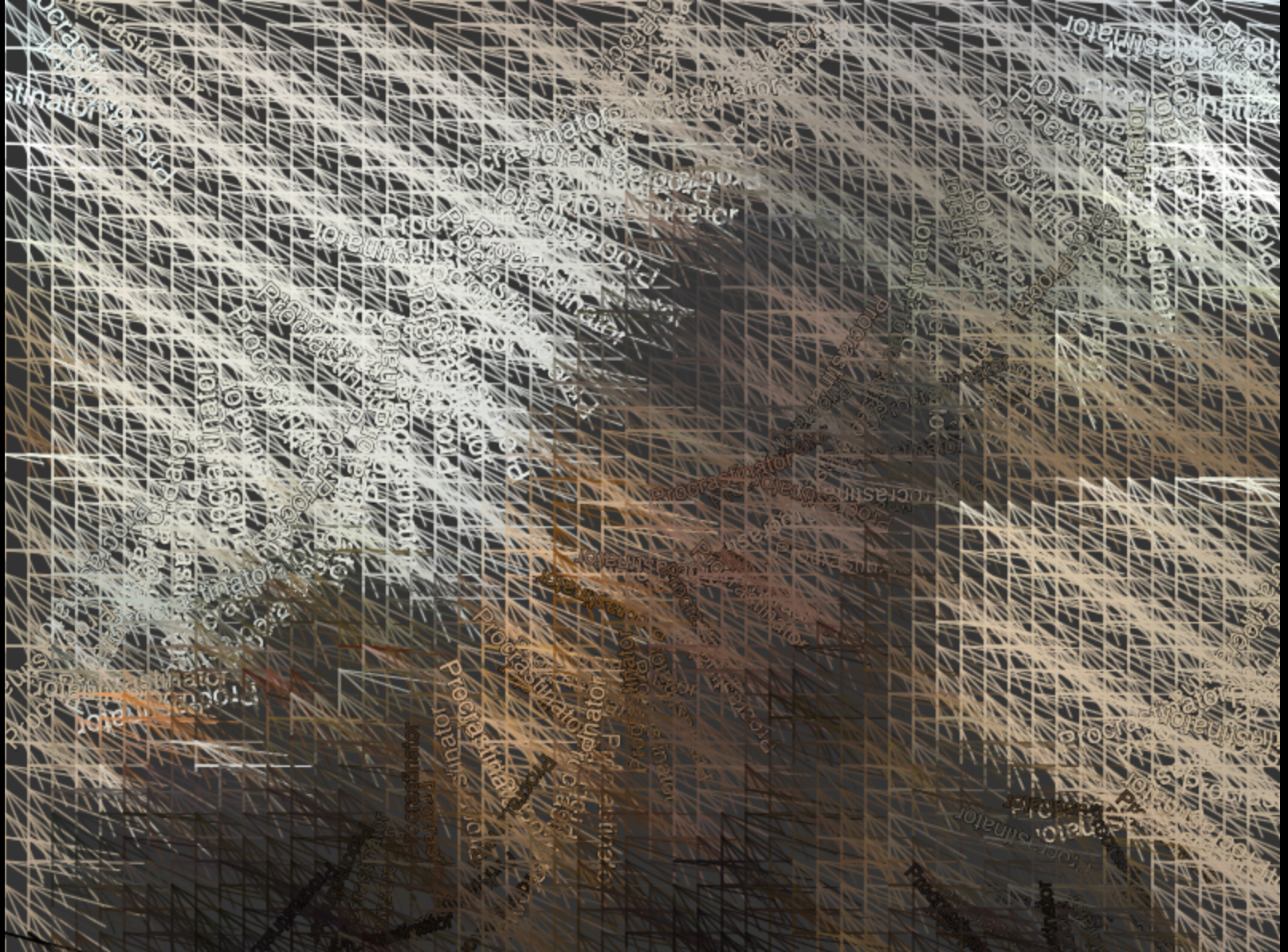
Station #3: The distortion of your digital identity
Aim: visualize the dynamic distortion of digital identity through evolving labels and classifications. The use of the camera simulates facial recognition and biometric data collection, creating a stronger connection to your identity.

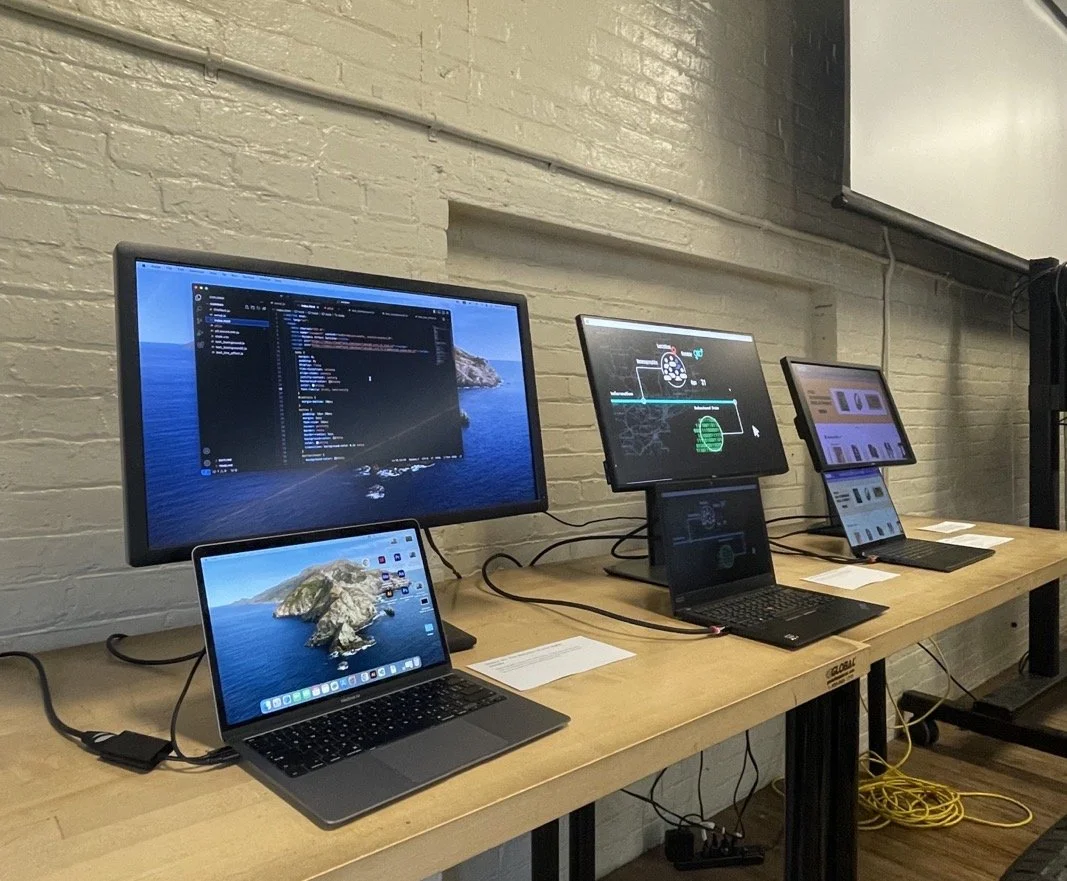
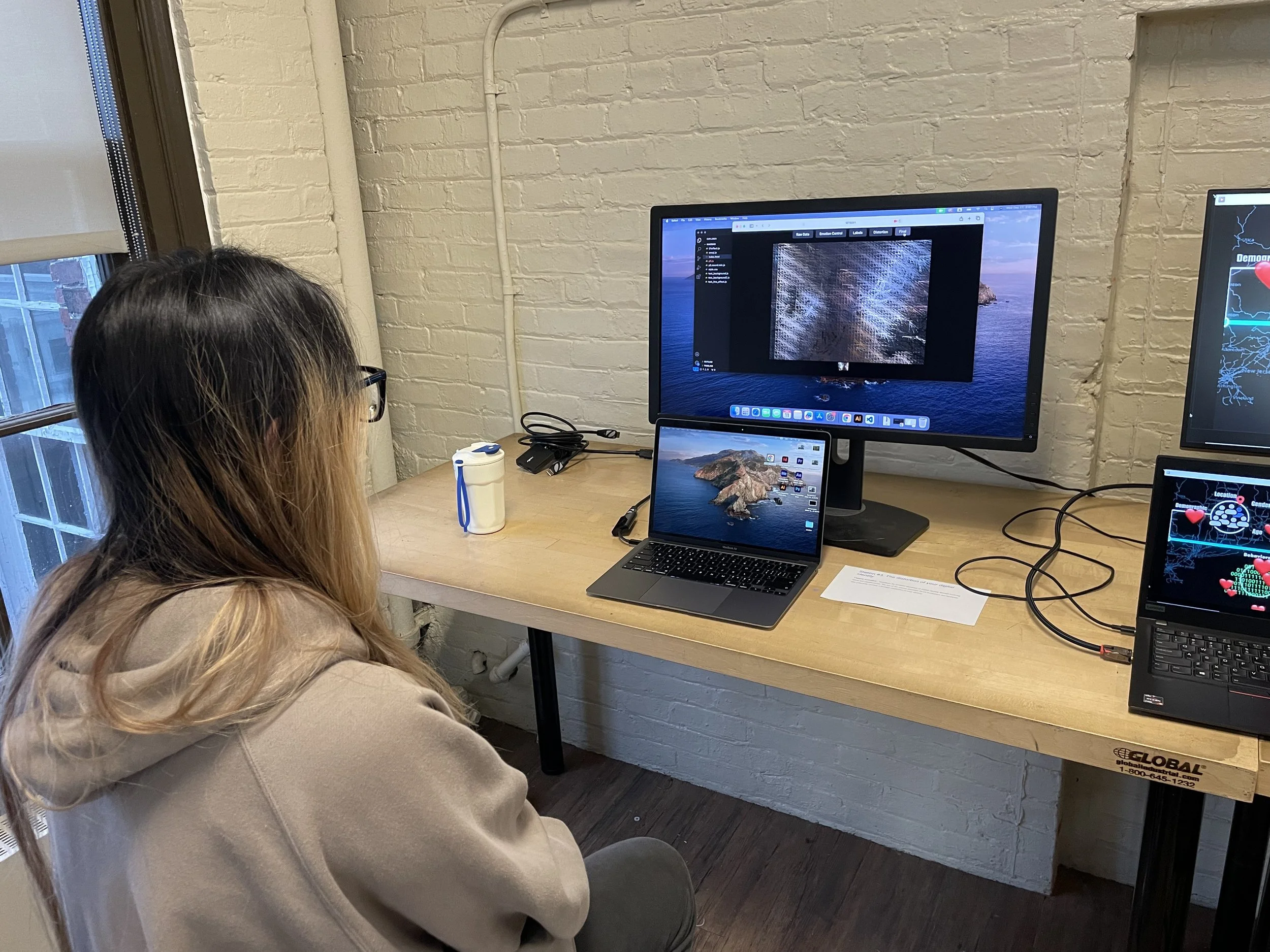
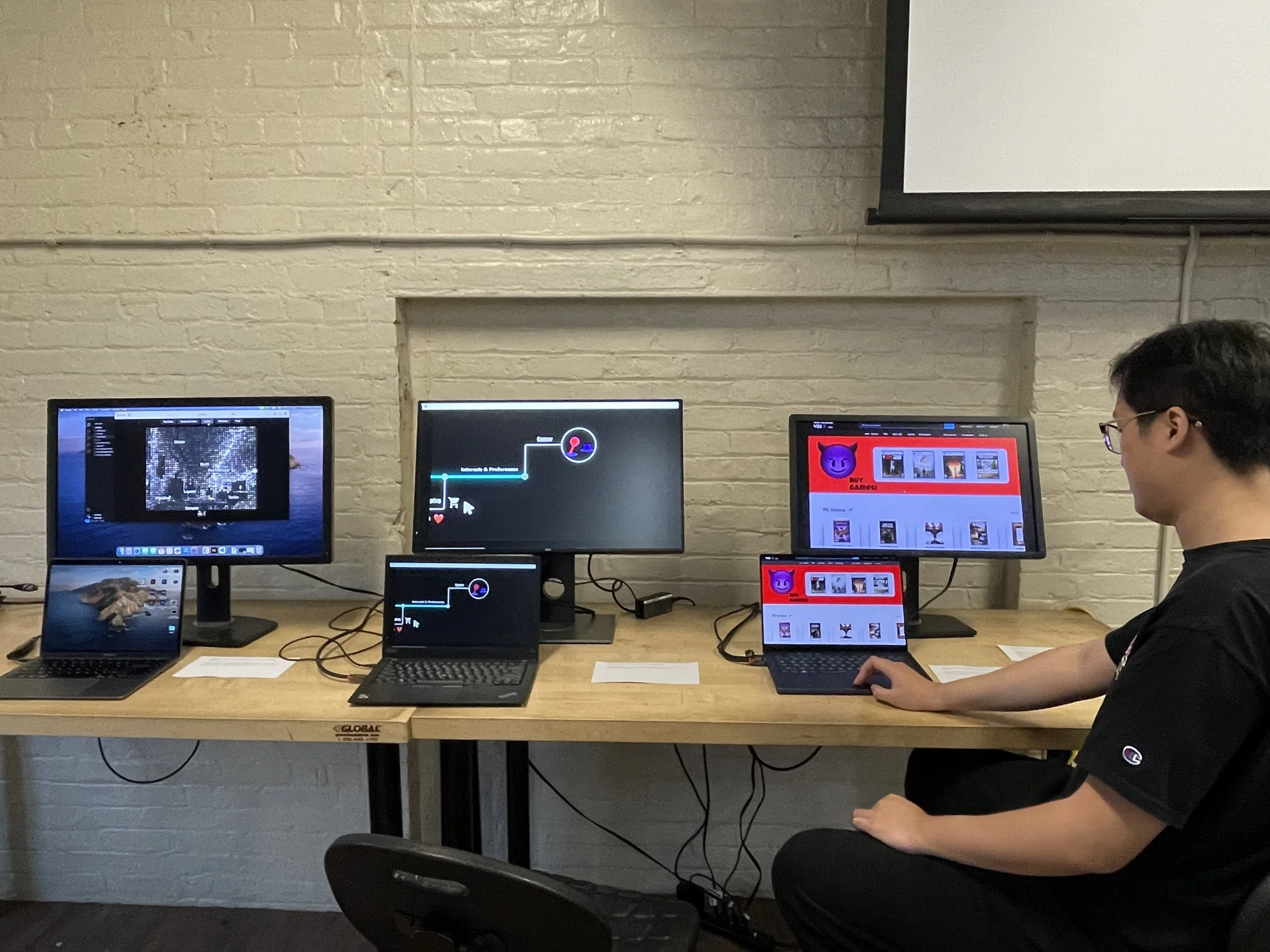
Audiences was playing around with the interactive device



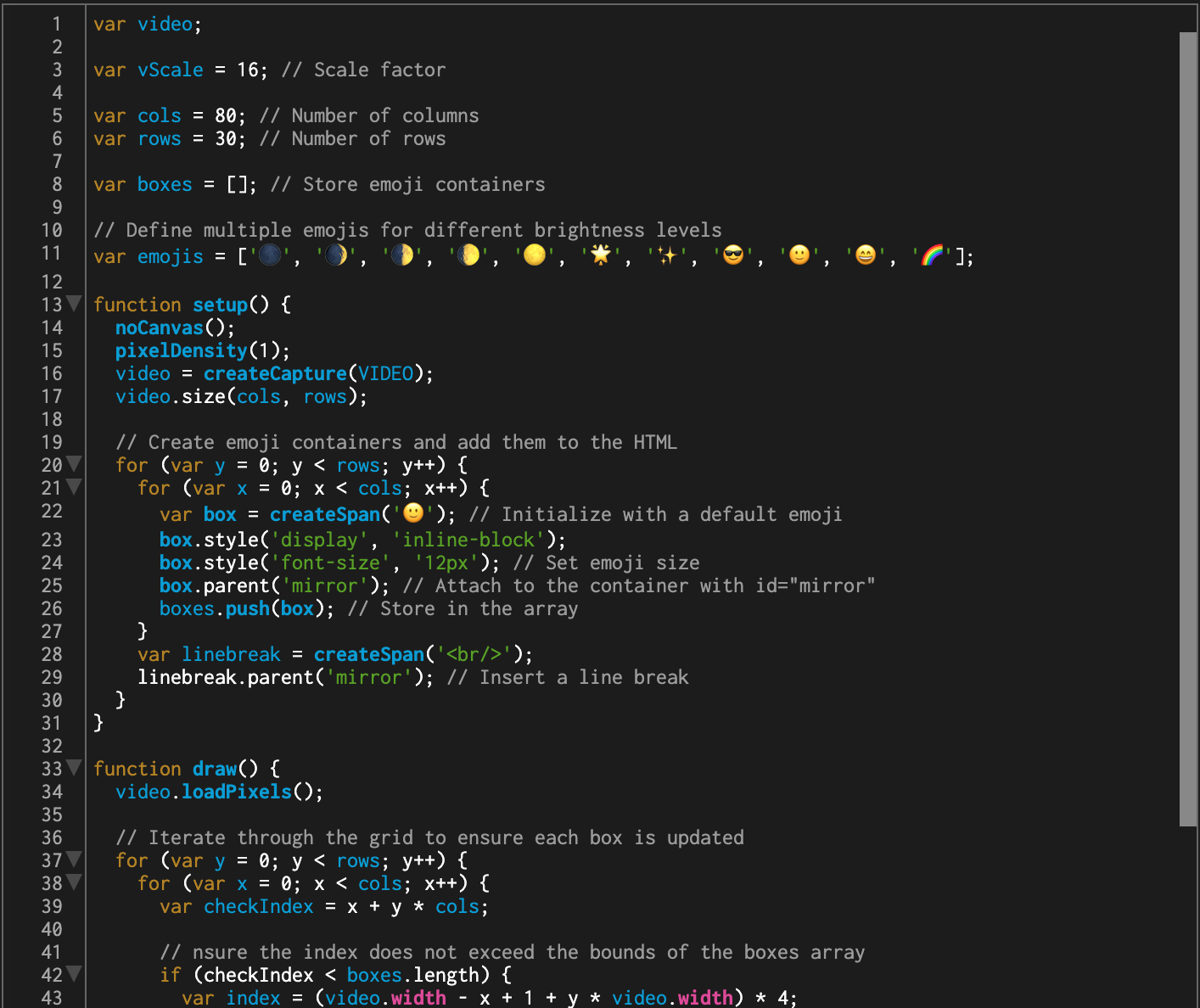
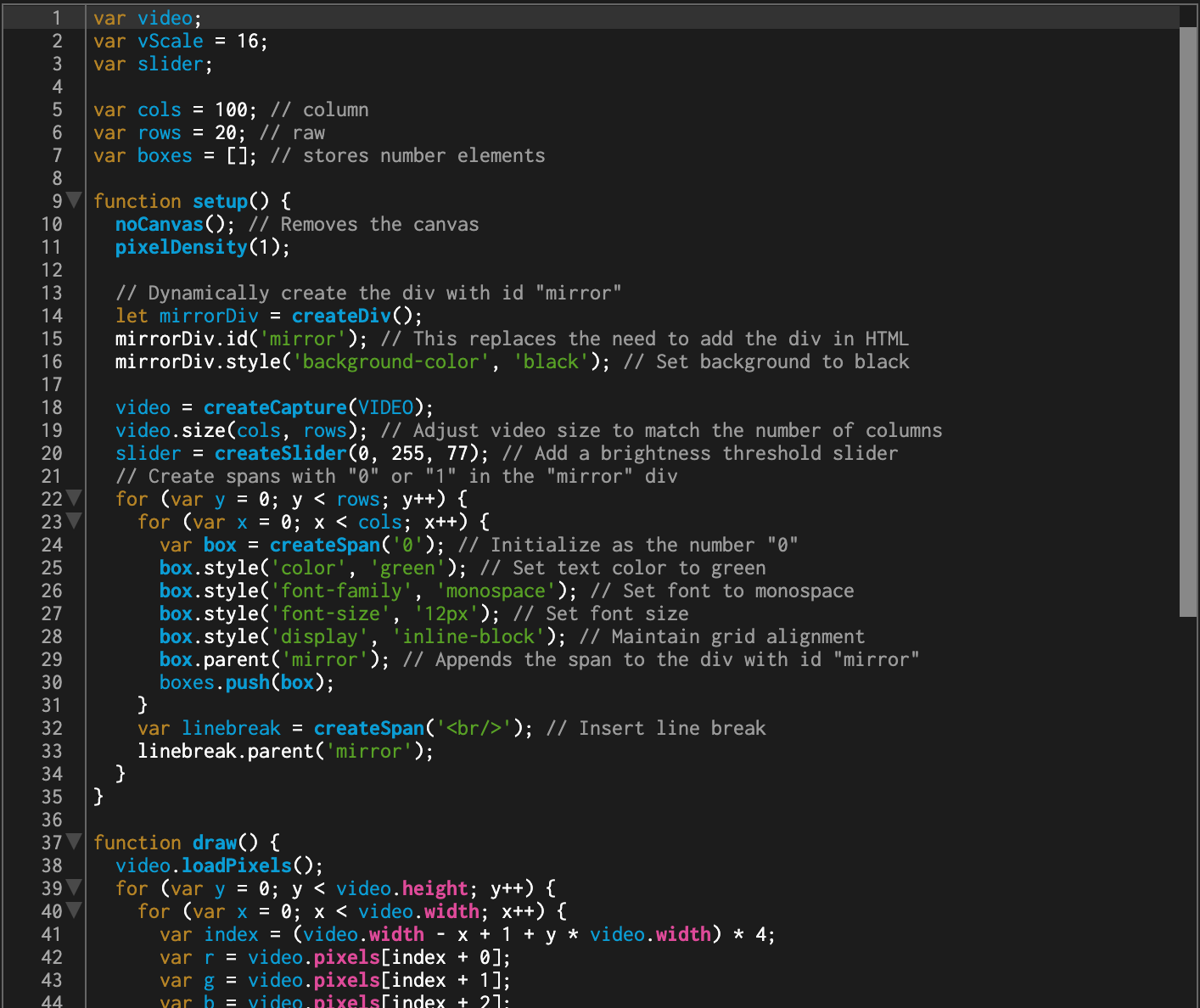
Codes Sample in p5.js

Reflection
Working on this surveillance capitalism project has been an eye-opening experience that pushed me to get to know about the realities of how our digital information is used and commodified. The metaphor of humans as products reveals a striking truth: our data is no longer just a byproduct of online activity—it’s the very fuel driving a multibillion-dollar economy.
But why does this matter? As Shoshana Zuboff outlines in The Age of Surveillance Capitalism, we are witnessing a shift where human privacy is not only tracked but actively manipulated to predict and shape behavior. This is more than a breach of privacy—it’s a transformation of power. When companies know us better than we know ourselves, they don’t just respond to our needs; they create them. And in doing so, they strip away agency, one subtle nudge at a time. It’s not just about data and numbers, it’s about freedom, democracy, and the ability to shape our own future. That’s why we should care.
Looking ahead, the next steps must go beyond awareness. There’s a need for systemic action: transparency in data collection, stronger regulations, and the development of technologies that prioritize user control and ethical practices. Designers and technologists, like myself, need to rethink the systems we create—not as tools of surveillance, but as the empowerment of agency.
The Next Project: